Wednesday, April 24, 2013

The Power of Image

http://www.nikkikahn.com/#/chernobyl--25-years-later/chernobyl_09
http://cdn.lightgalleries.net/4bd5ebf58f340/images/chernobyl_09-1.jpg

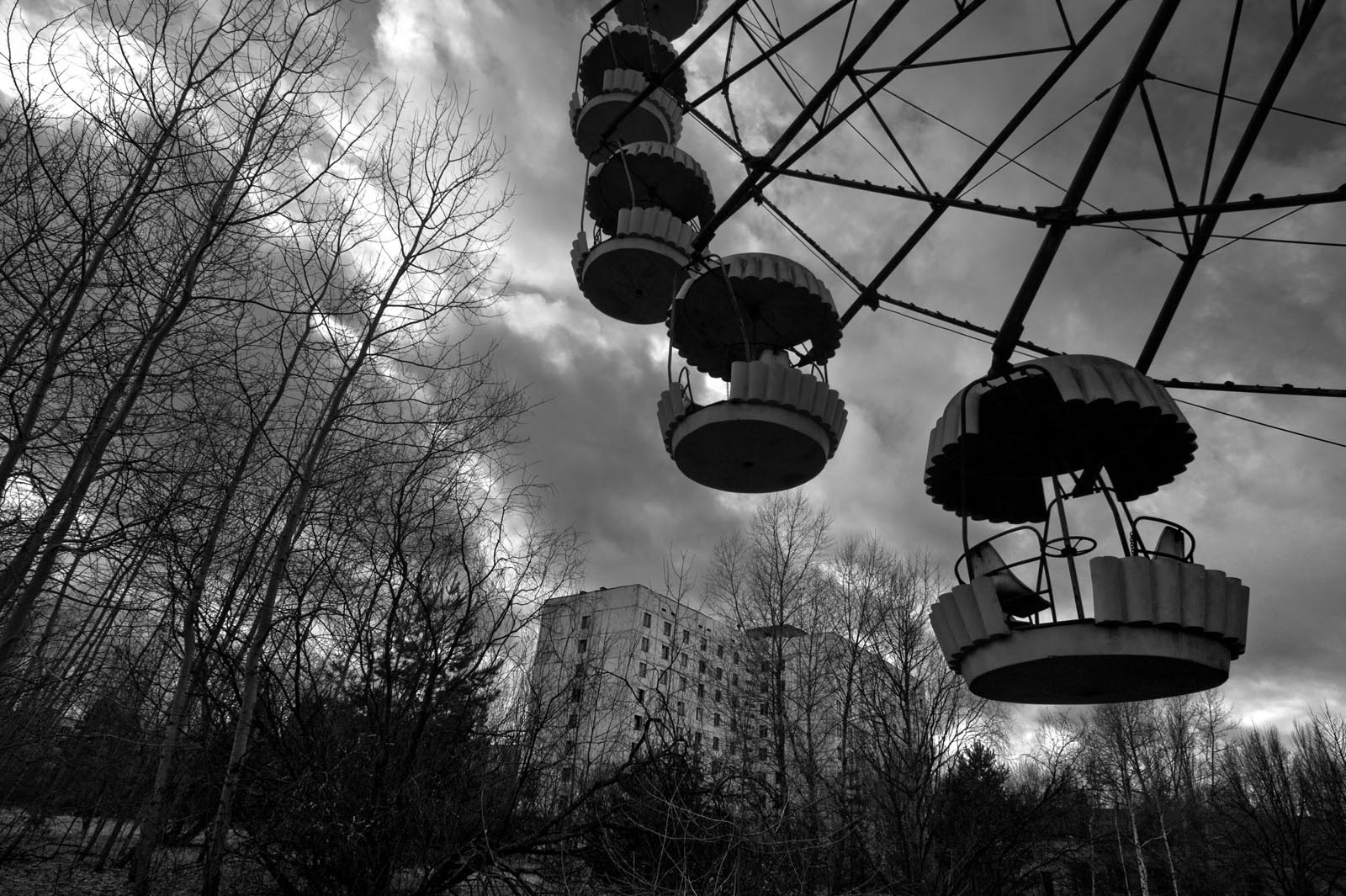
          Of all the disasters caused by nuclear, the Chernobyl disaster of 1986 is widely considered the most devastating. The Chernobyl nuclear disaster was caused by an ignition of nuclear material in one of the reactors in the Chernobyl nuclear plant (near the city of Pripyat), causing radioactive fallout to be exposed into the atmosphere. Within a few hours of the accident, people started to fall ill due to radiation exposure. Trees started to wither and die. The city of Pripyat was then considered a dead zone, and all citizens were forced to evacuate from the region. The picture above clear portrays the aftermath of the effects of the disaster in the city of Pripyat and the dangers of nuclear energy.

          The lack of colors emphasizes the features of the 'Dead Zone'. The dead zone was considered in hospitable to life due to the radiation. As you can see the trees are all dried up and leafless. The city is a ghost town. The shading is clear used to create a murky mood to the image. The clouds are covering the area of the picture, which further bolsters the lack of life. 

          The objects within the picture is cleverly placed so as to emphasize the lack of people as much as possible. There is an empty apartment building in the background of the picture. The apartment itself is in a pristine condition, and the windows are void of light. This shows that no one lives there anymore, but people used to live there not so long ago. The dead trees cover the background and parts of the foreground. These trees today, are called the 'Red Forest', due to the tinge of red which the trees showed after they were exposed to the radiation. The trees are all dead by now, and completely naked. The lower end of a Ferris wheel is shown in the foreground. A Ferris Wheel gives off a connotation associated with children, and the Ferris wheel in the foreground is tangible evidence that shows children used to live in the city. However, the Ferris wheel is no longer being used, which bring about a negative mood to the image. Overall, the objects in the image emphasizes the fact that the city is now a complete Ghost Town, all its facilities intact, yet none are occupying it.

         The purpose of this image of this image is clear. While many are aware of the dangers of nuclear explosions, few consider the aftermath of nuclear disasters. Relatively few impacted by the actual explosion compared to the number of people who were forced out of their homes due to the dead zone following the explosion at Chernobyl. This image not only shows a striking picture of the city of Pripyat following the Chernobyl disaster  it also emphasizes the horrors of nuclear disaster in general, and allows the audience to reconsider the safety of harnessing nuclear energy.

          The picture above is a striking picture which illustrates the effect of the Chernobyl nuclear disaster on the city of Pripyat. It uses the effects of shadows and coloring, placement of objects in the forgeound and background, and it does so in a way that bolsters the overall message behind it, which is the danger and risks of harnessing nuclear power.

Monday, April 22, 2013

3rd Paragraph of Finnegans Wake, by James Joyce

          Sometimes when I feel ambitious, and have nothing to do, I sit down and make my 1 billionth attempt to read through, in my opinion, the most difficult book ever. Soon I would admit defeat and fail to read the book for the billionth time. And that book, is 'Finnegans Wake', by James Joyce. When I say that this book is hard, I mean it, is, hard. Iam not entirely sure what makes it so hard, the fact that the author uses multiple dialects or the fact that it takes hours of research to interpret a single paragraph. In this post I will make an attempt to interpret the 3rd paragraph in the book. 

This is the 3rd paragraph.

The fall (bababadalgharaghtakamminarronnkonnbronntonner-ronntuonnthunntrovarrhounawnskawntoohoohoordenenthur — nuk!) of a once wallstrait oldparr is retaled early in bed and later on life down through all christian minstrelsy. The great fall of the offwall entailed at such short notice the pftjschute of Finnegan, erse solid man, that the humptyhillhead of humself prumptly sends an unquiring one well to the west in quest of his tumptytumtoes: and their upturnpikepointandplace is at the knock out in the park where oranges have been laid to rust upon the green since dev-linsfirst loved livvy.

          I will start my interpretation with a disheartening defeat, because I have absolutely no clue as to what 'bababadalgharaghtakamminarronnkonnbronntonner-ronntuonnthunntrovarrhounawnskawntoohoohoordenenthur' means, although 'nuk!' seems to mean 'not!', in English. 'Of a once wallstrait oldparr', is indicative to a certain individual. 'Wallstrait', was originated from Greek Orthodox, or is a calque of a Roman language. Many interpret this word as 'Wall Street', however, I take it to mean 'well-straight'. 'Oldparr', is commonly thought to be an allusion to Thomas Parr, an old man in England who supposedly lived until 152 years old. 'Oldparr' is much more understandable when it is voiced aloud, giving it the meaning, 'old pa', or 'old father'. A minstrelsy is a music and poetry of a medieval minstrel. So the first sentence, translated into a somewhat English setting would be, 'The fall of a once well and straight old father is now in bed through all the christian minstrelsy'. And that was one sentence.

          It seems the word 'pftjschute', has stumped a lot of people, some say it is an ideophonic word which depicts the fall of Finnegan. Others say it is an alteration of 'prosciutto' which is etymological for femina, or suckle, which depicts the sexual matters of Finnegan's fall. I for one believe it to be an onomatopoeia, because the word 'pfft' is a french interjection of scorn or indifference. The part of 'humptyhillhead of humself', is an allusion to the common nursery rhyme, 'Humpty Dumpty', who once sat one a great wall, only to fall from it and shatter beyond recovery. 'Prumptly sends an unquiring one', can interpreted as 'promptly sends an inquiring one'. The 'tumptytumtoes', is an allusion to Finn MacCool, who is a giant who slept with his giant feet sticking up. This allusion seems fitting since it seems that Finnegan is named after Finn MacCool. So, the sentence can be interpreted as, 'The fall of Finnegan happened at such a short notice, that the fall of the erse solid man, that the head himself sends an inquiring one to the toes'. All in all emphasizing the suddenness of the fall of Finnegan.

          The word 'upturnpikepointandplace', is composed of 5 words, up, turn, pike, point, and place. Many seem to agree that under context, these 5 words are referring to the the 5 toes mentioned earlier. The phrase 'since dev-linsfirst loved livvy', is an allusion to the Genesis 6:1-4, where 'it came to pass, that the sons of God saw daughters of men that hey were fair. There were giants in the earth in those days'. This is when the devils seduced the Daughters of Men and the offspring were the giants, which is again an indirect reference to Finn MacCool, Finnegan's name sake. Overall, this sentence emphasizes the fact that Finnegan has been in bed for a long time.

Today, Finnegans Wake, by James Joyce is considered by some to be a literary master piece, while others see it as an abomination, and a joke to the English language, mainly because of the fact that Joyce uses multiple languages, such as Gaelic, German, Danish, French, Roman, Hebrew, Latin American, Irish, etc. Not to mention that fact that hours of research is required in order to follow every allusion and identify every language in a single page.

Honestly, a billion attempts and all I could reach was the 3rd paragraph.

If you want to take a shot at this book, try it out.

http://ebooks.adelaide.edu.au/j/joyce/james/j8f/episode1.html

Sunday, April 21, 2013

US Presidential Approval Ratings

          It has occurred to me that what ever goes on in the United States, it is the president who receives much glory and shoulders much blame. The seat in the Oval office is a powerful one indeed. While most powerful individuals have no care for what others think of him or her, the presidency is somewhat different. The president's power is all dependent on the opinion of the people, because it was the people who put him in office, and it is the people who could deny him a another term. Historically, two factors had a major role in shifting presidential approval ratings through the roof or crawling the floors, and they are war efforts and the economy.

         As far as approval ratings go, the official recorded ratings go only as far as FDR (Franklin D. Roosevelt)'s second term (1937-1938). It is little wonder why people blame or glorify the president over war efforts, after all, the president has the war powers. FDR's approval ratings rose while he actually seemed to be doing something about the Great Depression which struck the country on 1929. However, with the recession of 1937-1938, his approval ratings dropped again. Come 1939, FDR was forced to use his war powers, 1939 was the day the US entered World War II. With the war effort came mass production, and with it recovery from the depression. FDR's approval ratings rose as high as the low 90%. A similar example of how the war effort shifted the approval rating, was when Harry S. Truman decided to drop 'Fat Man' and 'Little Boy' on Hiroshima and Nagasaki. He enjoyed an approval rating over 95% then. Lyndon B. Johnson, on the other hand, managed the Vietnam war poorly, and so when the war dragged on, his approval ratings were dragged to the floorboards. In fact, some were so far against him, that they protested the war on the streets chanting 'LBJ, LBJ, How many kids have you killed today?!'.

          What I don't understand is why people put such blame on the presidents for a bad economy. My guess is that few realize that the president has no control over the economy. People just like to think it is so, because they need someone to blame. For example, when the Great Depression struck, FDR had engulfed himself into the issue trying to recover the country from it, and theoretically he did everything right, but it wasn't he who recovered the US from the depression, it was WWII. Presidents such as Dwight D. Eisenhower, George H W. Bush, and Bill Clinton enjoyed good approval ratings thanks to a bountiful economy. A famous example of how the president is blamed for the worsened economy is one, George W. Bush, who set an all time record of deficits. Although his reasons for his actions were well justified, a fair few still blames his administration for the worsened economy. What people don't realize is that he spent trillions pouring money into the stock market when it appeared to be on the verge of crashing, which probably stopped another 'Great Depression', and caused the deficits. Again, except for extreme cases, the president has no real control over the economy but, he is still credited for it. Which is why George W. Bush suffered a drop of approval rates ever since his first year in office.

          If you wish to see the official poll for yourself, visit...


Monday, April 15, 2013

Persuassive Essay: Superman vs Batman


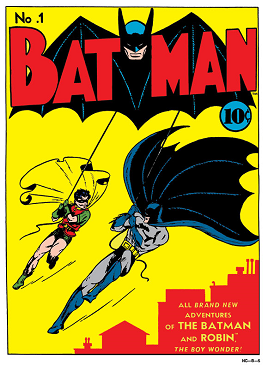
Since the dawn of time, or more specifically the late 1930's, mankind has struggled to settle the seemingly everlasting question that will change the face of the spandex covered muscular heroism industry forever. It was the year 1938 and 1939, when the world was first introduced to, Superman and Batman, and ever since, the issue of settling upon the superior spandex covered muscular hero, now commonly known as ‘Superhero’, has claimed the responsibility of countless bar fights and nerdy debates. As for me, there is no dispute to my answer to this age old question, because as of today, Batman is clearly the superior superhero.

Much of what we as a community envision as a ‘hero’, defines us as a community in general. This is why there has always been a fickle aspect to the relative popularity of Superman and Batman. In fact, when these two heroes were first introduced in 1938 and 1939, Superman was clearly the superior hero. America in the late 1930’s was still under the toils of the Great Depression. The mighty Superman was portrayed as a hero of the working-class, more often than not, he would be rescuing workers from the dangers of the coal mines, and other disasters created by the greed and negligence of their evil employers. Keep in mind that the Batman character was a billionaire, which in does days were not severely liked. Batman was at the height of popularity in the 1960’s, during America’s ‘Age of Affluence’, a time when prosperity was relatable. Today, it is more common to find the face of the masked vigilante of Gotham City as opposed to the daring face of the ‘Man of Steele’. This is largely thanks to the recent portrayal of the ‘Dark Knight’ saga, which emphasized the character’s status as a martyr under more cynical circumstances. The recent saga certainly cleaned up the mess of the ‘Batman’ film of 1989, where Batman was nothing more than a rich man with an assortment of tools on his belt. Many would agree that the ‘Batman’ film was a theatrical catastrophe. Under trying times, Batman is clearly the more superior hero.

Personally I see Batman as a better character and superhero in general. Superman is what many would consider the primal superhero, everyone knows who he is, yet today, Batman has a larger fan base. Because Superman was built upon rugged masculinism, he is virtually indestructible, with the sole weakness of Kryptonite, and women. While his feature creates a great iconic figure which would last for a very long time, it does not make for good stories. The many comic strips of Superman have always come to the same conclusion, fly fast and punch hard. This is not the same for Batman who uses his ingenuity and intellect to overcome problems. Since Superman’s powers are so superior, the writers were often forced to use gimmicky plots such as blocking out the sun to make the comic strip interesting. Batman’s stories are always more down to Earth, and relatable, because he doesn’t rely on sheer bulk to punch himself a solution. We are at a point where the smarts are more appreciated than the muscles. I mean, the reaction of the people when learning of Mohammad Ali’s increasing illness was nothing compared to their reaction upon learning of Steve Job’s illness. People get bored of punching after 904 episodes.

All in all, it is clear that Batman is the better spandex covered muscular hero. And when you look at it often enough, the fact that a grown man is wearing spandex also grows on you. This question has been debated and discussed for far too long and far too much. While the question itself may not be at an end, as of today, Batman beats Superman down to the last detail.

If you wish to voice your own opinions on the matter, visit these links to learn more.

http://www.supermanhomepage.com/news.php
http://legionsofgotham.org/

Tuesday, April 9, 2013

My Reflection On: "On Compassion" by Barbara Lazear Ascher

                No matter where we go it seems that there is always poverty, and the homeless just about anywhere. Their presence is like those of roaches, there aren’t many of them crowded in a single place, but somehow they are always, solidly, eerily present. All one has to do is walk through a bustling street and he or she would find a few here and there. I bet you you’d find a few homeless people even in the deepest depths of bloody hell. Poverty and the homeless is a significant part of what I’m about to talk about, but it’s not the main topic. I started this piece because apparently, people feel compassion when it comes to homeless people.

                Barbara Lazear Ascher believes that compassion is not something that is born with us when we escape our mother’s womb; it is something that is learned through experience. I do agree that compassion is not an innate trait we humans possess, but I do not entirely agree that experience with the homeless and the poor is what will bring about compassion. Fortunately for me, I have not been exposed to the horrors of poverty when I was little, Singapore was a small place, and there was little room for the poor. Much of what I could get from experience with the poor when I was little was when I was in kindergarten and I learned it was ‘common courtesy’ to empty your pockets for them. Which I found to mean, ‘give what you can afford to this complete stranger because that’s what a descent person would do’, you’ll forgive me for saying so, but I didn’t understand a lick of why I’d do such a thing. Obviously, people who haven’t seen the homeless do not feel compassion; Barbara Lazear Ascher was right about that much at least.

                For what it’s worth, much of my real life experiences with the poor were after I came to Malaysia. What with the mandatory Malaysia Week, and the GAP program and what-not, what can I say, it was forced upon me. For the first time, I came to know what it meant to be poor and homeless. I came to realize that what a descent person would do, is empty his or her pockets. But yet, I did not learn compassion. The more I came to learn what it meant to be compassionate, the more I realized that it simply meant I’d feel the same pain the poor feel when I observe them. I reckoned it simply wasn’t worth the struggle. I learned that compassion led to service, which aimed to rid of poverty and alleviate the pain. I also came to notice that much of the service we did made little or no dent on the horrors of poverty. Compassion simply wasn’t worth the effort.

                Even today when I find a homeless person, the instinct of a descent person is the first to emerge. As a descent person, or at least I like to think of myself as one, I reach into my pocket, but then my experiences are taken into account, and the compassion switch is turned off. I then do what any mature, intelligent, pragmatic, and logical person would do. I pretend to rummage for change. Obviously I haven’t learned compassion yet, and probably won’t any time soon.

Wednesday, April 3, 2013

My reflection on... Failure to Learn Japanese in Only Five Minutes


                  I guess this is just one of those things you never really forget. One of those details in life which you never really seem to be able to forget, no matter how insignificant it may seem. Ironically, it seems to matter a great deal to me because whenever I think back to the good old days when I had no worries and no care in the world, I never seem to be able to shave off this particular detail.

                  It’s not much of a detail as it is an eerie feeling of foreboding. I don’t know how many of you have been to Singapore or not, but having lived in Malaysia, I now realize how obsessed Singapore was with cleanliness and hygiene. I swear, even today, I would give anyone a dollar for every piece of trash he or she finds in the street, because there simply isn’t any. Of course, if we all scour the entire place I bet I’d have to pay a few bucks, but the way I remember it; nobody would have found a single speck of garbage on the streets.

                  Funny thing is, I’m not exaggerating either. I remember the days when the boldest thing a boy could do is chew gum in public. You see, the fine for getting caught chewing gum was around $5,000 dollars. Of course this didn’t stop me from chomping on rubber, with the right connections anyone could get their hands on bubble gum, they were the marijuana of childhood. The reason for such strict measures against gum was the apparent mess they caused, with mankind’s natural instinct to stick the gum under a table or anywhere they can reach.

                  Yet, I can think of one other bold move to show society who’s the ‘boss’, and that was graffiti. I say this because I’ve seen what the punishment is for graffiti in Singapore. When I was a kid, I knew this kid who drew a picture on a wall next to a street corner with his crayon. Of course when I say graffiti, I mean an innocent drawing of a 5 or 6 year old kid who probably didn’t know any better. However, when the police officers caught the poor kid, they dragged him over to the police office and beat him have to death. Not a very pretty thing to do, but, that’s what you get for graffiti.

                  I hear the rules are much less stringent now-a-days, it's too bad the policemen now lost their excuse to beat up small children to blow off steam but, I'd say it would be for the better. I mean, I visited Singapore just a couple of months ago, and the streets are just as clean, even with the less strict rules, perhaps the obsession was just something innate that the people show or something. Anyway, I believe I've made my point. Some people just like to be clean.

I guess numbers would never beat the insight of personal experience, but to get a general idea of what Singapore is like, feel free to take a look.

http://www.singstat.gov.sg/

Tuesday, March 22, 2011

How does ethnnocentricity cause conflict?

On Jan 26th of year 1788, the British arrived to a place which is today known as Sydney, only to find that someone was already there. The British could not have found a more different group of people. Unlike the British, the 'First Australians' were black in skin tone, and were armed differently and believed in different belief systems. The British's objective was to now, interact with these natives, and try to connect with them. Eventually, the attempt was unsuccessful due to the British people's bias and prejudice perspectives of the natives, caused by ethnocentrism. Even though relations seemed to be smooth and easy, many of the new comers could not stop think that the natives were, in some aspects, savage, and wild. Soon the British had to devise a method to co-exist with the land, and the native Australians. Their methods soon turned out to involve digging up the native crops such as yam, and replacing them with familiar crops like corn and potatoes. Clearly the British were not comfortable with change in their lifestyle and decided to show there ethnocentric views. In effect, the ethnocentric views of the British people seemed to have formed a deluded idea in their heads that their lifestyle is right and unquestionable, thus the only logical thing to do is to fit this new land to meet their demands. The actions caused by the British's views later caused a conflict which could not be ignored. Enraged by the fact that their land was taken the that his people were starving, a man called Pemulwuy set fire to strategic points of the corn farms to burn a large portion of the British people's food supply. As this continued, what was supposed to be a conflict, later evolved to look more like a war. Eventually Pemulwuy's head was taken and transported to England in a jar of alcohol. The act of beheading a man and taking it is much more than a sigh of victory, it is also an insult to those who were close to him, because with no head to go with the body, Pemulwuy cannot be given a proper burial, which the First Australians strongly believed in. A short while after Pemulwuy was silenced, Bennelong, who has set sail to England to experience their world, has returned to find that his land has changed in a way that he has never expected. His wife has left him, his people were starving and in peril, and he has lost his powerful position within his people. While Bennelong kept to the British culture, the rest of the British people were satisfied. However, when he developed an addiction towards alcohol, he was made a drunk. He was not wanted among the whites. As soon as Bennelong decided to go back to his own people, the British regarded him as a savage. The British had thought that they had finally succeeded in helping Bennelong shift from his wild and savage ways and be a civilized man, but their tendency to see issues based on their own belief, has stopped them from ever wondering, nor understanding how Bennelong himself felt about his situation. This again shows the British people’s ethnocentric ways. All in all, the British new comers were bias, selfish, and inconsiderate to the culture of the First Australians, and all caused events that could have been prevented, had they ignored their ethnocentric views and accepted the different lifestyle of the First Australians.

Blog List

Followers

Contributors