Sunday, April 21, 2013

US Presidential Approval Ratings

          It has occurred to me that what ever goes on in the United States, it is the president who receives much glory and shoulders much blame. The seat in the Oval office is a powerful one indeed. While most powerful individuals have no care for what others think of him or her, the presidency is somewhat different. The president's power is all dependent on the opinion of the people, because it was the people who put him in office, and it is the people who could deny him a another term. Historically, two factors had a major role in shifting presidential approval ratings through the roof or crawling the floors, and they are war efforts and the economy.

         As far as approval ratings go, the official recorded ratings go only as far as FDR (Franklin D. Roosevelt)'s second term (1937-1938). It is little wonder why people blame or glorify the president over war efforts, after all, the president has the war powers. FDR's approval ratings rose while he actually seemed to be doing something about the Great Depression which struck the country on 1929. However, with the recession of 1937-1938, his approval ratings dropped again. Come 1939, FDR was forced to use his war powers, 1939 was the day the US entered World War II. With the war effort came mass production, and with it recovery from the depression. FDR's approval ratings rose as high as the low 90%. A similar example of how the war effort shifted the approval rating, was when Harry S. Truman decided to drop 'Fat Man' and 'Little Boy' on Hiroshima and Nagasaki. He enjoyed an approval rating over 95% then. Lyndon B. Johnson, on the other hand, managed the Vietnam war poorly, and so when the war dragged on, his approval ratings were dragged to the floorboards. In fact, some were so far against him, that they protested the war on the streets chanting 'LBJ, LBJ, How many kids have you killed today?!'.

          What I don't understand is why people put such blame on the presidents for a bad economy. My guess is that few realize that the president has no control over the economy. People just like to think it is so, because they need someone to blame. For example, when the Great Depression struck, FDR had engulfed himself into the issue trying to recover the country from it, and theoretically he did everything right, but it wasn't he who recovered the US from the depression, it was WWII. Presidents such as Dwight D. Eisenhower, George H W. Bush, and Bill Clinton enjoyed good approval ratings thanks to a bountiful economy. A famous example of how the president is blamed for the worsened economy is one, George W. Bush, who set an all time record of deficits. Although his reasons for his actions were well justified, a fair few still blames his administration for the worsened economy. What people don't realize is that he spent trillions pouring money into the stock market when it appeared to be on the verge of crashing, which probably stopped another 'Great Depression', and caused the deficits. Again, except for extreme cases, the president has no real control over the economy but, he is still credited for it. Which is why George W. Bush suffered a drop of approval rates ever since his first year in office.

          If you wish to see the official poll for yourself, visit...


Monday, April 15, 2013

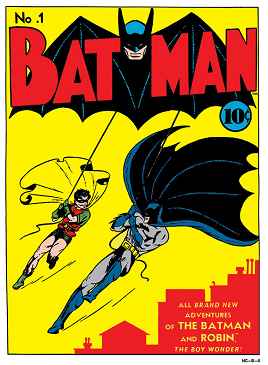
Persuassive Essay: Superman vs Batman


Since the dawn of time, or more specifically the late 1930's, mankind has struggled to settle the seemingly everlasting question that will change the face of the spandex covered muscular heroism industry forever. It was the year 1938 and 1939, when the world was first introduced to, Superman and Batman, and ever since, the issue of settling upon the superior spandex covered muscular hero, now commonly known as ‘Superhero’, has claimed the responsibility of countless bar fights and nerdy debates. As for me, there is no dispute to my answer to this age old question, because as of today, Batman is clearly the superior superhero.

Much of what we as a community envision as a ‘hero’, defines us as a community in general. This is why there has always been a fickle aspect to the relative popularity of Superman and Batman. In fact, when these two heroes were first introduced in 1938 and 1939, Superman was clearly the superior hero. America in the late 1930’s was still under the toils of the Great Depression. The mighty Superman was portrayed as a hero of the working-class, more often than not, he would be rescuing workers from the dangers of the coal mines, and other disasters created by the greed and negligence of their evil employers. Keep in mind that the Batman character was a billionaire, which in does days were not severely liked. Batman was at the height of popularity in the 1960’s, during America’s ‘Age of Affluence’, a time when prosperity was relatable. Today, it is more common to find the face of the masked vigilante of Gotham City as opposed to the daring face of the ‘Man of Steele’. This is largely thanks to the recent portrayal of the ‘Dark Knight’ saga, which emphasized the character’s status as a martyr under more cynical circumstances. The recent saga certainly cleaned up the mess of the ‘Batman’ film of 1989, where Batman was nothing more than a rich man with an assortment of tools on his belt. Many would agree that the ‘Batman’ film was a theatrical catastrophe. Under trying times, Batman is clearly the more superior hero.

Personally I see Batman as a better character and superhero in general. Superman is what many would consider the primal superhero, everyone knows who he is, yet today, Batman has a larger fan base. Because Superman was built upon rugged masculinism, he is virtually indestructible, with the sole weakness of Kryptonite, and women. While his feature creates a great iconic figure which would last for a very long time, it does not make for good stories. The many comic strips of Superman have always come to the same conclusion, fly fast and punch hard. This is not the same for Batman who uses his ingenuity and intellect to overcome problems. Since Superman’s powers are so superior, the writers were often forced to use gimmicky plots such as blocking out the sun to make the comic strip interesting. Batman’s stories are always more down to Earth, and relatable, because he doesn’t rely on sheer bulk to punch himself a solution. We are at a point where the smarts are more appreciated than the muscles. I mean, the reaction of the people when learning of Mohammad Ali’s increasing illness was nothing compared to their reaction upon learning of Steve Job’s illness. People get bored of punching after 904 episodes.

All in all, it is clear that Batman is the better spandex covered muscular hero. And when you look at it often enough, the fact that a grown man is wearing spandex also grows on you. This question has been debated and discussed for far too long and far too much. While the question itself may not be at an end, as of today, Batman beats Superman down to the last detail.

If you wish to voice your own opinions on the matter, visit these links to learn more.

http://www.supermanhomepage.com/news.php
http://legionsofgotham.org/

Tuesday, April 9, 2013

My Reflection On: "On Compassion" by Barbara Lazear Ascher

                No matter where we go it seems that there is always poverty, and the homeless just about anywhere. Their presence is like those of roaches, there aren’t many of them crowded in a single place, but somehow they are always, solidly, eerily present. All one has to do is walk through a bustling street and he or she would find a few here and there. I bet you you’d find a few homeless people even in the deepest depths of bloody hell. Poverty and the homeless is a significant part of what I’m about to talk about, but it’s not the main topic. I started this piece because apparently, people feel compassion when it comes to homeless people.

                Barbara Lazear Ascher believes that compassion is not something that is born with us when we escape our mother’s womb; it is something that is learned through experience. I do agree that compassion is not an innate trait we humans possess, but I do not entirely agree that experience with the homeless and the poor is what will bring about compassion. Fortunately for me, I have not been exposed to the horrors of poverty when I was little, Singapore was a small place, and there was little room for the poor. Much of what I could get from experience with the poor when I was little was when I was in kindergarten and I learned it was ‘common courtesy’ to empty your pockets for them. Which I found to mean, ‘give what you can afford to this complete stranger because that’s what a descent person would do’, you’ll forgive me for saying so, but I didn’t understand a lick of why I’d do such a thing. Obviously, people who haven’t seen the homeless do not feel compassion; Barbara Lazear Ascher was right about that much at least.

                For what it’s worth, much of my real life experiences with the poor were after I came to Malaysia. What with the mandatory Malaysia Week, and the GAP program and what-not, what can I say, it was forced upon me. For the first time, I came to know what it meant to be poor and homeless. I came to realize that what a descent person would do, is empty his or her pockets. But yet, I did not learn compassion. The more I came to learn what it meant to be compassionate, the more I realized that it simply meant I’d feel the same pain the poor feel when I observe them. I reckoned it simply wasn’t worth the struggle. I learned that compassion led to service, which aimed to rid of poverty and alleviate the pain. I also came to notice that much of the service we did made little or no dent on the horrors of poverty. Compassion simply wasn’t worth the effort.

                Even today when I find a homeless person, the instinct of a descent person is the first to emerge. As a descent person, or at least I like to think of myself as one, I reach into my pocket, but then my experiences are taken into account, and the compassion switch is turned off. I then do what any mature, intelligent, pragmatic, and logical person would do. I pretend to rummage for change. Obviously I haven’t learned compassion yet, and probably won’t any time soon.

Wednesday, April 3, 2013

My reflection on... Failure to Learn Japanese in Only Five Minutes


                  I guess this is just one of those things you never really forget. One of those details in life which you never really seem to be able to forget, no matter how insignificant it may seem. Ironically, it seems to matter a great deal to me because whenever I think back to the good old days when I had no worries and no care in the world, I never seem to be able to shave off this particular detail.

                  It’s not much of a detail as it is an eerie feeling of foreboding. I don’t know how many of you have been to Singapore or not, but having lived in Malaysia, I now realize how obsessed Singapore was with cleanliness and hygiene. I swear, even today, I would give anyone a dollar for every piece of trash he or she finds in the street, because there simply isn’t any. Of course, if we all scour the entire place I bet I’d have to pay a few bucks, but the way I remember it; nobody would have found a single speck of garbage on the streets.

                  Funny thing is, I’m not exaggerating either. I remember the days when the boldest thing a boy could do is chew gum in public. You see, the fine for getting caught chewing gum was around $5,000 dollars. Of course this didn’t stop me from chomping on rubber, with the right connections anyone could get their hands on bubble gum, they were the marijuana of childhood. The reason for such strict measures against gum was the apparent mess they caused, with mankind’s natural instinct to stick the gum under a table or anywhere they can reach.

                  Yet, I can think of one other bold move to show society who’s the ‘boss’, and that was graffiti. I say this because I’ve seen what the punishment is for graffiti in Singapore. When I was a kid, I knew this kid who drew a picture on a wall next to a street corner with his crayon. Of course when I say graffiti, I mean an innocent drawing of a 5 or 6 year old kid who probably didn’t know any better. However, when the police officers caught the poor kid, they dragged him over to the police office and beat him have to death. Not a very pretty thing to do, but, that’s what you get for graffiti.

                  I hear the rules are much less stringent now-a-days, it's too bad the policemen now lost their excuse to beat up small children to blow off steam but, I'd say it would be for the better. I mean, I visited Singapore just a couple of months ago, and the streets are just as clean, even with the less strict rules, perhaps the obsession was just something innate that the people show or something. Anyway, I believe I've made my point. Some people just like to be clean.

I guess numbers would never beat the insight of personal experience, but to get a general idea of what Singapore is like, feel free to take a look.

http://www.singstat.gov.sg/

Tuesday, March 22, 2011

How does ethnnocentricity cause conflict?

On Jan 26th of year 1788, the British arrived to a place which is today known as Sydney, only to find that someone was already there. The British could not have found a more different group of people. Unlike the British, the 'First Australians' were black in skin tone, and were armed differently and believed in different belief systems. The British's objective was to now, interact with these natives, and try to connect with them. Eventually, the attempt was unsuccessful due to the British people's bias and prejudice perspectives of the natives, caused by ethnocentrism. Even though relations seemed to be smooth and easy, many of the new comers could not stop think that the natives were, in some aspects, savage, and wild. Soon the British had to devise a method to co-exist with the land, and the native Australians. Their methods soon turned out to involve digging up the native crops such as yam, and replacing them with familiar crops like corn and potatoes. Clearly the British were not comfortable with change in their lifestyle and decided to show there ethnocentric views. In effect, the ethnocentric views of the British people seemed to have formed a deluded idea in their heads that their lifestyle is right and unquestionable, thus the only logical thing to do is to fit this new land to meet their demands. The actions caused by the British's views later caused a conflict which could not be ignored. Enraged by the fact that their land was taken the that his people were starving, a man called Pemulwuy set fire to strategic points of the corn farms to burn a large portion of the British people's food supply. As this continued, what was supposed to be a conflict, later evolved to look more like a war. Eventually Pemulwuy's head was taken and transported to England in a jar of alcohol. The act of beheading a man and taking it is much more than a sigh of victory, it is also an insult to those who were close to him, because with no head to go with the body, Pemulwuy cannot be given a proper burial, which the First Australians strongly believed in. A short while after Pemulwuy was silenced, Bennelong, who has set sail to England to experience their world, has returned to find that his land has changed in a way that he has never expected. His wife has left him, his people were starving and in peril, and he has lost his powerful position within his people. While Bennelong kept to the British culture, the rest of the British people were satisfied. However, when he developed an addiction towards alcohol, he was made a drunk. He was not wanted among the whites. As soon as Bennelong decided to go back to his own people, the British regarded him as a savage. The British had thought that they had finally succeeded in helping Bennelong shift from his wild and savage ways and be a civilized man, but their tendency to see issues based on their own belief, has stopped them from ever wondering, nor understanding how Bennelong himself felt about his situation. This again shows the British people’s ethnocentric ways. All in all, the British new comers were bias, selfish, and inconsiderate to the culture of the First Australians, and all caused events that could have been prevented, had they ignored their ethnocentric views and accepted the different lifestyle of the First Australians.

Thursday, February 24, 2011

Solo/Duet Performance Preparation

Context: In a public area, Brutus and Cassius is having a conversation. Cassius is trying to convince Brutus to turn against Caesar.

The significance of this passage is that the conspiritors need Brutus most of all, because Brutus will serve as figurehead of the conspirators, and that way, the conspirator's deed will seem more noble and honourable. Brutus is a patriot who has always loved Rome, and the people of Rome knows this about him. It is also significant because Brutus later on as he acts as the leader of the conspirators, makes a few crucial decisions that will alter the flow of the play. As far as Brutus id concerned, The reason he killed Caesar is just, and the people of Rome will understand that, if Brutus explained it to them. This makes him careless, and also goes to the point where he shows a bit of hubris, which causes him to make carless mistakes. Such mistakes as assuming Antony is but a limb of Caesar, and cannot do anything without him.

(Aaron: Cassius, Ragav: Brutus)
ACT I

SCENE II
(Lines 25-88)

CASSIUS
Will you go see the order of the course?

BRUTUS
Not I.

CASSIUS
I pray you, do.

BRUTUS
I am not gamesome: I do lack some partOf that quick spirit that is in Antony.Let me not hinder, Cassius, your desires;I'll leave you.

CASSIUS
Brutus, I do observe you now of late:I have not from your eyes that gentlenessAnd show of love as I was wont to have:You bear too stubborn and too strange a handOver your friend that loves you.

BRUTUS
Cassius,Be not deceived: if I have veil'd my look,I turn the trouble of my countenanceMerely upon myself. Vexed I amOf late with passions of some difference,Conceptions only proper to myself,Which give some soil perhaps to my behaviors;But let not therefore my good friends be grieved--Among which number, Cassius, be you one--Nor construe any further my neglect,Than that poor Brutus, with himself at war,Forgets the shows of love to other men.

CASSIUS
Then, Brutus, I have much mistook your passion;By means whereof this breast of mine hath buriedThoughts of great value, worthy cogitations.Tell me, good Brutus, can you see your face?

BRUTUS
No, Cassius; for the eye sees not itself,But by reflection, by some other things.

CASSIUS
'Tis just:And it is very much lamented, Brutus,That you have no such mirrors as will turnYour hidden worthiness into your eye,That you might see your shadow. I have heard,Where many of the best respect in Rome,Except immortal Caesar, speaking of BrutusAnd groaning underneath this age's yoke,Have wish'd that noble Brutus had his eyes.

BRUTUS
Into what dangers would you lead me, Cassius,That you would have me seek into myselfFor that which is not in me?

CASSIUS
Therefore, good Brutus, be prepared to hear:And since you know you cannot see yourselfSo well as by reflection, I, your glass,Will modestly discover to yourselfThat of yourself which you yet know not of.And be not jealous on me, gentle Brutus:Were I a common laugher, or did useTo stale with ordinary oaths my loveTo every new protester; if you knowThat I do fawn on men and hug them hardAnd after scandal them, or if you knowThat I profess myself in banquetingTo all the rout, then hold me dangerous.

BRUTUS
What means this shouting? I do fear, the peopleChoose Caesar for their king.

CASSIUS
Ay, do you fear it?Then must I think you would not have it so.

BRUTUS
I would not, Cassius; yet I love him well.But wherefore do you hold me here so long?What is it that you would impart to me?If it be aught toward the general good,Set honour in one eye and death i' the other,And I will look on both indifferently,For let the gods so speed me as I loveThe name of honour more than I fear death.

Monday, January 31, 2011

My Learning Profile


I am a logic thinker with an 'A' profile. Referring to the learning profile sheet for the 'A' profile, apparantly I learn best when I focus on the details, and I tend to plan out my actions before I act. Personally, I didn't notice these things about me before I saw the bullet points on the sheet. However, now that I think about my past experiences, I noticed that I was always the one to start typing last, whenever I had to start a paper on the computer. I suppose, that plotting and organizing comes naturally to me, and that is what I started to do, right off the bat the moment I had the laptop sitting on my lap. Since plotting and organizing comes so easily to me, I do perfer step-by-step instructions, as apose to a simple 'here's what I want, do it'. I am able to retreave information through my my eyes and ears even under stress, with that in mind, I believe that I learn best when I sit on the left side of the class so I can use my right ear more efficiently.

My left brain is totally dominant because I use my right hand, my right eye, my ear and so on and so forth, because of this, I would definately have difficulty connecting to emotional information. In this case, participating in positive and enjoyable sensory motion experiences will help me with that. Unfortunately, even as I typed that down, I have no clue what-so-ever, about what 'positive and enjoyable sensory motion' is. The profile sheet tells me that art and music will help me, and I am agreeing with the music, but not the art, because I enjoy playing musical insturments (especially string instruments such as the violin, and the guitar), and I am very picky about the songs I like to play, I am not sure how to explain it, but some songs simply appeal more to me than others. Meanwhile, in terms of art, I do not seem to use my right brain as much as I would while playing music, that is probably because, arts and crafts look good when they are 'processed correctly' and to me, a good piece of art is has more to skill than emotion. All in all, I need to play more music, to connect to my right brain.

A good strategy to help me with my learning would be to set me up on the left side of the room where I can see and hear more efficiently (since my right eye and ear is more dominant). I have already mentioned this before, but I understand and easily take in stey-by-step instructions, so it will be enormous help if this step-by-step instruction is apparant when I am given instrucions, that way, I won't have to waste my time doing it myself. When I don't understand the bigger idea of the topic, it would be huge help to list out key pointers and main ideas, to understand the bigger picture, in a way that appeals to me. Although I am saying this right now, I don't think the teachers should change what they are doing currently.

A few things that the teachers may want to know about me is that I do like sitting with my friends, but I know better, and thus I do not mind sitting with a complete stranger (unless the person in question is annoying and naturally noisy), I realize that, whenever the teachers use a presentation, I have a habit of glancing at the screen once to read through it, then I would stare at the ground or stare into the distance while the teacher is talking about what is on the screen. I would like to note that whenever I do that it basically means I'm in deep thought, but I am also listening in to what the teacher is saying. Also, whenever I ask for a comment, I would like teachers to be strict, because to me, 8th grade is a chance for me to get ready for high school, and a chance to see where I am weak, and improve upon it (apparantly high school is much harder to get by, as Melissa has often showed me). I have experienced a lot of different schools (including public and international) to know that teachers have different expectations from their students, and thus the way they teach could differ greatly, and since school life another life stlye in itself, it is hard to adapt to certain people. For example, my mandarin teacher expects us to be quiet and to pay attention, on the other hand my math teacher like us to constantly ask questions so that he can tell us what we don't know, I would like teachers to know, that it is hard for students to give everyone what they expect, because some student could be quiet, or reluctant to share ideas, and some could be out-going, or has a tendency to talk with out considering what comes out of his or her mouth, and so on, and so forth. All in all, I prefer to learn in an environment where everyone is focused and is on task, and I like to follow step-by-step instructions. I am not the type to stand up in class and willingly share my thoughts to the class (I prefer to go to the teacher and ask them questions personally if I have a problem, so it would help me greatly when teachers are willing to lend a hand and help me whenever I need it). This post has helped me figure out things about me that not even I knew before, and I hope it will help me be a more constructive learner.

Blog List

Followers

Contributors